Foundation Bundle

Courses in this bundle:


KOHTMS Foundation Bundle
The Core Training for Building, Administering, and Defending Your Trust Estate
Every strong structure begins with a foundation.
The KOHTMS Foundation Bundle is the essential training series for anyone serious about understanding trust estate administration, covenant authority, and fiduciary stewardship. These four mastery-level courses form the core knowledge required to properly establish, administer, and defend a trust estate.
Most people encounter trusts only as legal documents or estate planning tools. But the trust estate framework is much deeper than paperwork—it is a complete system of stewardship, authority, administration, and protection. When properly understood, the trust estate becomes the structure through which assets are managed, responsibilities are fulfilled, and future generations are provided for.
The Foundation Bundle was designed to guide students step-by-step through this framework.
Beginning with the spiritual and covenant foundation of stewardship, students first explore the deeper principles of authority, responsibility, and fiduciary duty. From there, the training moves into the practical mechanics of creating a trust estate, learning how trust property is established and administered, and understanding how trustees maintain proper control and oversight of the estate.
Finally, the bundle culminates with advanced instruction on defending the trust estate, where students learn how trustees maintain authority over trust property and protect the estate from outside interference.
Together, these four courses form a complete foundation for trust administration.
What’s Included in the Foundation Bundle
The Steward of the Everlasting Covenant
A Mastery Course in Covenant Administration, Authority, and Defense
This course establishes the Biblical and covenantal foundations of stewardship. Students explore the nature of covenant authority, the responsibilities of a steward, and the principles that guide faithful administration. The course explains how covenant structures operate and how authority flows within them, providing the philosophical and spiritual framework that underlies all trust estate administration.
Establishing Your Trust Estate
This course teaches the practical mechanics of creating a trust estate. Students learn how trusts are structured, how trust property is placed into the estate, and how trustees establish the administrative framework necessary to manage assets responsibly. By the end of the course, students understand how a properly structured trust estate functions and how its internal governance operates.
From Public to Private – Mastering Trust Estate Administration
This course focuses on the ongoing administration of a trust estate. Students learn how trustees manage trust property, maintain accurate records, communicate with beneficiaries, and carry out fiduciary duties responsibly. The course provides the skills needed to administer the estate effectively while maintaining clarity, organization, and discipline in trust operations.
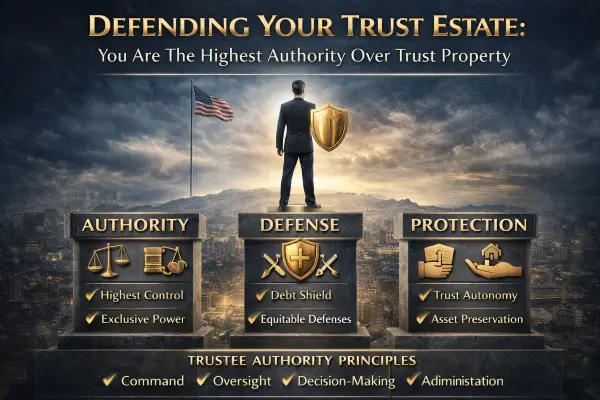
Defending Your Trust Estate
You Are the Highest Authority Over Trust Property
The final course in the Foundation Bundle teaches trustees how to protect and defend the trust estate. Students learn how trustees maintain authority over trust property, respond to challenges, and ensure that the estate is administered according to its governing documents and fiduciary principles. This course equips trustees with the knowledge needed to preserve the integrity of the trust estate.
Why This Bundle Matters
The modern world is complex, and managing assets responsibly requires more than basic financial knowledge. Trustees must understand law, administration, stewardship, and authority all at once. The KOHTMS Foundation Bundle brings these elements together into a clear and structured training program.
Students who complete this bundle gain:
• A deep understanding of covenant stewardship
• The knowledge required to establish a trust estate
• Practical skills for administering trust property
• Confidence in defending and protecting the estate
• A structured framework for long-term fiduciary responsibility
These four courses form the foundation upon which all advanced KOHTMS training is built.
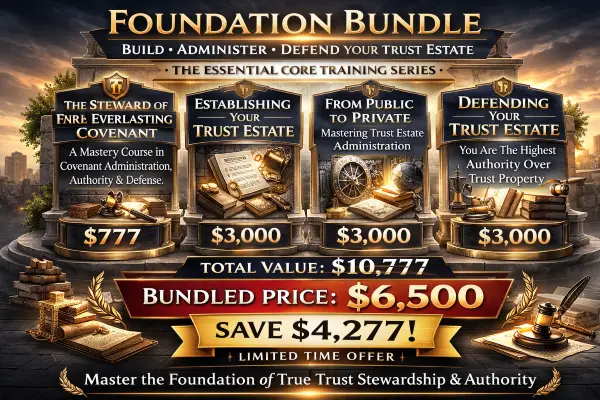
Total Value
Individually these courses represent over $8,000 in advanced trust education, but the Foundation Bundle provides them together as the complete starting point for anyone seeking to understand trust estate administration from both a practical and principled perspective.
This is where the journey begins.
Because before you can administer an estate,
you must understand the authority, structure, and stewardship that sustain it.