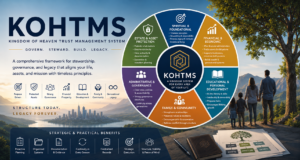
Benefits of the Kingdom of Heaven Trust Management System (KOHTMS)

Spiritual & Foundational Benefits

  1. Establishes governance under a covenant-based structure rooted in Scripture.
  2. Creates a framework for living intentionally rather than reactively.
  3. Encourages stewardship over ownership mentality.
  4. Aligns administration, family, and legacy with biblical principles.
  5. Reinforces personal responsibility and fiduciary accountability.
  6. Encourages generational thinking and inheritance planning.
  7. Creates continuity of administration beyond the life of one individual.
  8. Builds a structured legacy rather than leaving disorder to heirs.
  9. Encourages discipline, order, and lawful administration.
  10. Helps families think in terms of purpose, mission, and continuity.

Estate & Asset Protection Benefits

  1. Separates administration from personal identity.
  2. Helps reduce commingling between personal and estate matters.
  3. Creates organized asset management structures.
  4. Provides documented chains of administration and authority.
  5. Helps preserve records and historical documentation.
  6. Allows centralized administration of multiple assets and ventures.
  7. Supports succession planning for trustees and beneficiaries.
  8. Creates continuity during incapacity or death.
  9. Reduces confusion regarding who manages estate affairs.
  10. Allows estate activities to continue without interruption.
  11. Encourages proactive administration rather than crisis management.
  12. Helps identify and inventory estate assets.
  13. Creates structured processes for transfers and assignments.
  14. Helps families avoid fragmented administration.
  15. Allows layered management structures for different purposes.
  16. Encourages documentation of equitable interests and responsibilities.
  17. Supports long-term family office style administration.
  18. Helps maintain centralized control of records and agreements.
  19. Encourages preservation of family history and records.
  20. Creates continuity for businesses tied to the estate.

Financial & Economic Benefits

  1. Encourages budgeting and intentional financial administration.
  2. Creates systems for tracking obligations and receivables.
  3. Supports family wealth preservation strategies.
  4. Encourages strategic acquisition and protection of assets.
  5. Helps structure family businesses and ventures.
  6. Supports cooperative family economic models.
  7. Allows centralized management of projects and enterprises.
  8. Helps establish internal administrative systems.
  9. Encourages long-term investment thinking.
  10. Creates frameworks for private lending and internal finance.
  11. Encourages productive asset acquisition over consumer spending.
  12. Supports real estate management structures.
  13. Helps organize records for accounting and administration.
  14. Creates systems for documenting contributions and distributions.
  15. Encourages economic education within the family.
  16. Supports development of family enterprises and missions.
  17. Helps preserve equity built over generations.
  18. Allows strategic planning for future generations.
  19. Encourages preparedness and self-sustainability.
  20. Helps create resilient family economic systems.

Administrative & Governance Benefits

  1. Creates clear administrative roles and responsibilities.
  2. Defines trustee duties and expectations.
  3. Encourages structured meetings and recordkeeping.
  4. Creates formal governance systems for families and organizations.
  5. Allows written operating procedures and policies.
  6. Helps avoid informal and undocumented decision-making.
  7. Creates continuity during transitions in leadership.
  8. Encourages proper notice and documentation procedures.
  9. Supports internal dispute resolution structures.
  10. Creates systems for accountability among trustees and administrators.
  11. Helps organize records, minutes, and resolutions.
  12. Encourages lawful delegation of authority.
  13. Supports operational continuity across generations.
  14. Helps structure educational and mentorship systems for heirs.
  15. Encourages competency in administration and governance.
  16. Helps families develop internal standards and expectations.
  17. Creates administrative frameworks for ministries, businesses, and missions.
  18. Encourages organized communication systems.
  19. Supports centralized management of documents and policies.
  20. Creates professional administrative standards.

Educational & Personal Development Benefits

  1. Teaches fiduciary literacy.
  2. Encourages legal and administrative education.
  3. Helps families understand contracts, obligations, and governance.
  4. Encourages critical thinking and due diligence.
  5. Develops leadership and stewardship skills.
  6. Encourages disciplined recordkeeping habits.
  7. Helps heirs understand responsibility before inheritance.
  8. Builds confidence in administration and negotiation.
  9. Encourages self-education and research.
  10. Creates mentorship opportunities within families and communities.
  11. Supports development of business and financial literacy.
  12. Encourages strategic planning and problem-solving.
  13. Helps people think in systems rather than isolated events.
  14. Encourages mastery of process and procedure.
  15. Builds communication and organizational skills.
  16. Encourages competency before authority.
  17. Helps develop long-term thinking patterns.
  18. Encourages preparedness and adaptability.
  19. Creates educational pathways for future trustees.
  20. Supports personal growth through responsibility and service.

Family & Community Benefits

  1. Strengthens family communication and cooperation.
  2. Creates shared goals and long-term vision.
  3. Encourages intergenerational collaboration.
  4. Helps reduce confusion after death or incapacity.
  5. Creates structures for family support and assistance.
  6. Encourages preservation of family values and principles.
  7. Supports community-based economic cooperation.
  8. Encourages peaceful dispute resolution internally.
  9. Helps organize charitable and ministry efforts.
  10. Creates opportunities for shared stewardship projects.
  11. Encourages intentional parenting and heir training.
  12. Supports cooperative land and resource management.
  13. Helps establish family missions and objectives.
  14. Encourages continuity of traditions and teachings.
  15. Creates frameworks for family councils and advisory boards.
  16. Helps preserve family businesses and projects.
  17. Encourages collaborative problem-solving.
  18. Supports mutual aid and support systems.
  19. Helps families avoid fragmentation.
  20. Encourages unity through structure and purpose.

Strategic & Practical Benefits

  1. Encourages proactive planning rather than reaction.
  2. Creates organized systems before emergencies occur.
  3. Helps families prepare for legal and financial challenges.
  4. Supports documentation and evidence preservation.
  5. Encourages operational redundancy and backup systems.
  6. Helps maintain continuity during disputes.
  7. Creates centralized repositories for records and agreements.
  8. Supports long-term project management.
  9. Encourages strategic thinking about jurisdiction and governance.
  10. Helps families and organizations operate with greater structure, continuity, and intentionality.