Curriculum
Establishing Your Trust Estate
Establishing Your Trust Estate
0/40
-
Lesson 1: Why establish a trust estate in the first place?

-
LESSON 2 — INFORMATION GATHERING & INTERFACES
-
LESSON 3 — TYPES OF TRUSTS & FUNCTIONAL SEPARATION
-
LESSON 4 — PARTIES & ROLES Capacity, Authority, and Discipline
Preview
-
LESSON 5 — WHAT IS AN ESTATE? Relationships, Not Stuff
-
LESSON 6 — TRUSTS ARE ABOUT MANAGING RELATIONSHIPS: Law Between the Parties
-
LESSON 7 — SEPARATING YOU, YOUR RELATIONSHIPS, AND YOUR STUFF !!!
-
LESSON 8 — TITLES & CERTIFICATES OF TITLE: What They Mean and What Rights They Actually Confer
-
LESSON 9 — WHAT ARE THE RULES OF A TRUST, AND WHO MAKES THEM? Authority, Law Between the Parties, and Binding Order
-
LESSON 10 — WHAT DOES IT MEAN TO BE AN INDENTURED TRUSTEE / SERVANT? Authority Through Obligation, Not Entitlement
-
LESSON 11 — WHAT DOES IT TAKE TO BE A GOOD TRUSTEE / STEWARD? Competence, Character, and Faithfulness Over Time
-
LESSON 12 — WHO BENEFITS FROM THE TRUST RELATIONSHIP, AND WHAT ARE THEIR RIGHTS? Benefit Without Entitlement
-
LESSON 13 — WHAT IS THE MEANING OF OWNERSHIP? Why Ownership Is a Legal Fiction and Stewardship Is Real
-
LESSON 14 — WHAT IS THE SUBJECT MATTER OF A TRUST? What Authority Attaches To—and What It Cannot Touch
-
LESSON 15 — WHO HAS SUBJECT MATTER JURISDICTION OVER TRUST ASSETS, AND WHY? When Authority Is Legitimate—and When It Quietly Fails
-
LESSON 16 — WHAT IS STEWARDSHIP, AND WHY IS IT ESSENTIAL? Faithfulness as the Engine of Authority
-
LESSON 17 — OPERATING IN PRIVATE: Trust Governance as a Daily Way of Life
-
LESSON 18 — INVENTORY TIME: Organizing the Estate Without Creating Exposure
-
LESSON 19 — WHY IS YOUR WILL SO IMPORTANT? Living Will, Last Will, and Free Will Explained
-
LESSON 20 — SEPARATING THE MAN OR WOMAN FROM THE STATE: Church and State Properly Understood
-
LESSON 21 — TAKING CONTROL OF THE “STRAWMAN” THROUGH CHANGE IN MANAGEMENT Pass-Through Governance, Not Ownership
-
LESSON 22 — MANAGING MULTIPLE TRUSTS WHILE MAINTAINING PRIVACY: Why the Management Trust Is Essential
-
LESSON 23 — MARRIAGE AS COVENANT The Ketubah: The Original Marriage Trust
-
LESSON 24 — CHILDREN AND TRUST Why Every Child Deserves the Trust of Their Parents
-
LESSON 25 — DO YOU HAVE A BUSINESS OR WANT TO START ONE? Trust vs. Corporation: Purpose Preserved or Fragmented
-
LESSON 26 — ASSOCIATIONS AND FOUNDATIONS: Working Together Without Surrendering Authority
-
LESSON 27 — CREATING A LEGACY Leaving an Inheritance for Your Children and Your Children’s Children
-
LESSON 28 — FAMILY BANKING TRUSTS & TRUST FUNDS: Provision Without Dependency
-
LESSON 29 — INSURANCE TRUSTS AND WHO BENEFITS: Risk Management Without Ownership or Exposure
-
LESSON 30 — DON’T PUT ALL YOUR ASSETS IN ONE BASKET: Asset-Holding Trusts & Risk Segmentation
-
LESSON 31 — STRUCTURING YOUR ESTATE FOR PRIVACY: Layering Like an Onion: Distance, Not Defiance
-
LESSON 32 — STOP MAKING CONTRACTS WITH THE ADVERSARIAL SYSTEM: Remaining Private, Set-Apart, and Governed by Covenant
-
LESSON 33 — ALL RELATIONSHIPS ARE BUILT ON TRUST: The Law Between the Parties Arises from the Trust Agreement
-
LESSON 34 — THE PUBLIC SYSTEM LOVES WIN / LOSE CONTRACTS: Why All Your Trusts Must Be Win / Win and Equitable
-
LESSON 35 — EQUITABLE PRINCIPLES RECOGNIZED WORLDWIDE: The Universal Language of Trust Law
-
LESSON 36 — ACCOUNTING, MINUTES, REGISTRIES & OTHER EVIDENCES: Why Records Are the Proof of Faithfulness
-
LESSON 37 — CONVEYING PROPERTY INTO YOUR TRUSTS: Transfers That Hold Under Scrutiny
-
LESSON 38 — PICKING TRUSTWORTHY TRUSTEES: Or Training Them to Take Over Someday
-
LESSON 39 — TRUST WITHOUT DEEDS IS DEAD: If You Are Not Walking in Your Trust, It Will Not Protect You
-
LESSON 40 — STUDY TO SHOW YOURSELF APPROVED: The Indenture Is the Key to Managing It All
BONUS LESSONS AND TEMPLATES
0/16
LESSON 4 — PARTIES & ROLES Capacity, Authority, and Discipline
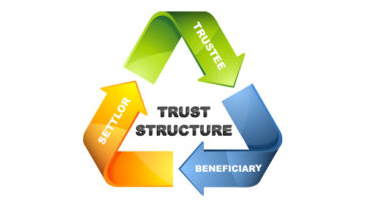
LESSON 4 — PARTIES & ROLES
Capacity, Authority, and Discipline
45–60 Minutes | Structural Integrity
Opening Thesis
Trusts do not collapse because documents are weak.
They collapse because people act in the wrong role.
Every action you take is taken in a capacity.
If you act without knowing which role you occupy, you act personally—and personal action is where liability, jurisdiction, and collapse enter.
This lesson disciplines you to know who is acting, for whom, and by what authority—before anything is done.
Core Doctrine
Authority exists only within a defined role.
Outside that role, there is no authority—only personal exposure.
A trust estate remains protected only when roles are clean, separated, and honored.
Equity does not ask what you intended.
Equity asks who acted and in what capacity.
Definitions (Beginner-Safe, Precise)
Role
A role is a defined position within a trust or agreement that:
-
Grants limited authority
-
Imposes specific duties
-
Forbids all actions outside those duties
A role is not a title for status.
It is a boundary for action.
Capacity
Capacity is the posture in which an action is taken.
Examples:
-
Personal capacity (dangerous)
-
Trustee capacity
-
Manager/Agent capacity
-
Administrative capacity
The same person can hold multiple roles,
but may only act in one capacity at a time.
Authority
Authority is permission to act that arises from:
-
A trust instrument
-
A written appointment
-
A defined delegation
Authority never arises from:
-
Urgency
-
Expertise
-
Emotion
-
“Common sense”
The Roles in the Revised 3-Trust Architecture
This lesson applies to all trusts, but is grounded in the three foundational trusts:
-
KOH Trust (Covenant)
-
Administrative / Interface Trust
-
Master Management Trust
Understanding who acts where is non-negotiable.
Role 1 — Trustee (Covenant Context)
Applies to:
-
KOH Trust only
Who:
-
The man or woman (living soul)
Authority Source:
-
Scripture (The Bible as the trust instrument)
Function:
-
Stewardship
-
Obedience
-
Alignment with God’s purposes
What the Trustee does NOT do here:
-
No banking
-
No agencies
-
No contracts
-
No administration
-
No defense actions
Plain explanation:
In the KOH Trust, the Trustee governs purpose, not paperwork.
Role 2 — Trustee (Administrative Context)
Applies to:
-
Administrative / Interface Trust
-
All other trusts governed by the Master Management Trust
Who:
-
The trust entity itself (not a person)
Authority Source:
-
Trust instrument
-
Delegation
Function:
-
Hold legal title only
-
Act through agents
-
Never benefit
Plain explanation:
A trust can be a trustee.
A person cannot be the trust.
Role 3 — Manager / Agent
Applies to:
-
Administrative / Interface Trust
-
Master Management Trust
Who:
-
The man or woman, only as agent
Authority Source:
-
Written appointment
-
Limited delegation
Function:
-
Execute tasks
-
Communicate
-
Sign where authorized
What the Manager may NOT do:
-
Decide policy
-
Deviate from instructions
-
Act personally
-
Explain trust purpose
Plain explanation:
The Manager moves the pen, not the plan.
Role 4 — Beneficiary
Applies to:
-
All trusts except the KOH Trust
Who:
-
The Kingdom of Heaven (God)
Function:
-
Receive benefit in purpose, not possession
Critical rule:
No man or woman is ever the beneficiary.
Private benefit = collapse.
Key Principles
1. One Action, One Capacity
You cannot:
-
Be Trustee and Manager at once
-
Act personally while claiming to act administratively
Before any action, you must know:
“In what capacity am I acting right now?”
2. Acting Outside Role = Personal Liability
Equity treats any action taken outside authority as personal conduct.
No trust protection applies to personal conduct.
3. Silence Is Often the Correct Role Action
Many roles require restraint, not response.
If your role does not require speech, silence is obedience.
Biblical Fiduciary Parallel (CJB — Written Out)
📖 Romans 12:4–5 (CJB)
“For just as in one body we have many parts, and not all the parts have the same function, so we who are many constitute one body in the Messiah; and individually we are parts of one another.”
Fiduciary meaning:
-
Different roles have different functions
-
No role replaces another
-
Disorder occurs when one part tries to act as all parts
Equity mirrors this principle exactly.
Key Error Patterns (Observed in Collapses)
❌ Error Pattern 1 — “I’ll Just Handle It”
A student:
-
Acts personally
-
Fixes an issue informally
-
Bypasses authorization
Result:
Alter-ego exposure. Trust pierced.
❌ Error Pattern 2 — Explaining Trust Matters
A student:
-
Explains structure
-
Justifies purpose
-
Defends intent
Result:
Jurisdiction created by speech.
❌ Error Pattern 3 — Wearing All Hats at Once
A student insists on being:
-
Trustee
-
Manager
-
Beneficiary
-
Decision-maker
Result:
Merger. No trust exists in equity.
Case Study — Failure
Scenario:
A bank questions an account transaction.
The student responds personally:
“This is my trust. I’m reorganizing my estate.”
Outcome:
-
Personal identification
-
Compliance escalation
-
Trust disregarded
Why it failed:
The student acted in personal capacity, not as agent.
Case Study — Success
Scenario:
Same bank inquiry.
The Manager responds:
“I am an authorized agent. Please direct any requests in writing.”
Outcome:
-
No explanation
-
No personal attachment
-
Authority preserved
Why it succeeded:
Correct role. Correct language. Correct restraint.
Required Records / Documents (Introduced)
1. Role Appointment Ledger (Template)
Fields:
-
Role name
-
Trust
-
Authority source
-
Scope of authority
-
Date effective
-
Signature
2. Capacity Statement (Internal Use)
A one-page statement:
-
Listing all roles you hold
-
Stating when each may act
-
Explicitly forbidding overlap
Homework & Actionable Assignment
Assignment 1 — Role Inventory
Write down:
-
Every role you currently perform
-
Whether it is personal or fiduciary
-
Where you are likely to act incorrectly
No corrections yet—just awareness.
Assignment 2 — Language Discipline
For the next week:
-
Do not use the word “my” in trust matters
-
Replace with role-based language (e.g., “the Trust,” “the Trustee,” “the Agent”)
Record every slip.
Closing Anchor
Trusts survive not by paperwork,
but by discipline in role and restraint in action.
The faithful administrator knows:
Who acts.
When to act.
When not to act.
